John Mitchell and Dr Alex Disney
Summary
The telemedicine network of the Renal Unit from The Queen Elizabeth Hospital (TQEH) in South Australia is a pioneer in the field, with the first installations in September 1994. Formal evaluation commenced in early 1995 and three annual evaluation studies and two research articles in a refereed telemedicine journal have been produced. This is the most thorough, longitudinal study of the implementation and adoption of telemedicine in Australia, and we are pleased to use this conference to provide a summary of results, to date.
The research reveals the extensive range of clinical, educational and administrative applications of telemedicine technology in the renal environment. The research also reveals the complex sets of needs, expectations, attitudes and concerns of patients, which need to be taken into account when managing a telemedicine network. There is a need for a constant dialogue with staff, in order to address their concerns regarding the system and practical difficulties. Our studies highlight the importance of planning, effort, cooperation and an appropriate culture within a renal unit in order for telemedicine to be accepted. Telemedicine is a human activity, not just a technology installation: it requires collaboration, active support and effective management if it is to succeed.
Background
The telemedicine network of TQEH’s Renal Unit includes permanent videoconferencing facilities at TQEH’s dialysis unit in Adelaide and at three satellite centres, at Wayville (10km from TQEH), North Adelaide (8km) and Port Augusta(300km). The Renal Network also links to other sites in South Australia and interstate, including to Mount Gambier (430km from Adelaide), Whyalla (397km), Clare (142km), Berri (236km), Loxton (255km) and Lyell McEwin Hospital at Salisbury (25km from TQEH).
Each Tuesday morning during the year, renal transplant meetings are conducted via telemedicine to both Royal Adelaide Hospital and Royal Darwin Hospital.
The facilities are also used regularly for educational purposes, particularly to conduct tutorials for Graduate Diploma (Nephrology) students at Port Augusta and Alice Springs.
The equipment in the Renal Unit includes four large, rollabout room systems and eight desktop videoconferencing units that use ISDN and two that operate on the normal telephone service. The latter are used for telemedicine-to-the-home services.
Evaluation studies
The original evaluation of the network focused on the quality of services provided, the cost effectiveness of the medium and the effectiveness of the technology. Additionally, the adoption of the technology by both staff and patients has been formally monitored since early 1995. To ascertain staff and patient acceptance, four surveys of staff and patients attitudes have been undertaken as follows: in early and mid 1995; in mid 1996; and in mid 1997. A major focus in 1996-97 was on the extent of clinical applications of telemedicine. In 1998, the focus is on evaluating telemedicine-to-the-home.
What is the breadth of clinical applications?
One of the key interests in our evaluation has been the extent of application of telemedicine in the renal environment. Following is summary of our study, as reported in the Journal of Telemedicine and Telecare, Vol. 3, No.1, 1997, pp.158-162.
A first major finding of the research is that the full range of staff, from surgeons and nephrologists to allied health workers and nurses, can use the technology for clinical purposes. In this research, we have interpreted the word ‘clinical’ to mean any situation in the dialysis environment involving the diagnosis or treatment of a patient. Table 1 sets out telemedicine users by groups and provides examples of their clinical uses of telemedicine.
Table 1 Types of Clinical Uses of Telemedicine in renal Unit, by Profession
| Professions | Types of Clinical Use |
| Surgeons (General; Cardio vascular) | Dialysis access assessments Elective and emergency assessment |
| Nephrologists and trainee medical staff | Elective and emergency consultation Review of clinical dialysis problems and transplant investigational results Visual assessment of skin, joints, signs of cardiac failure, infection, peripheral vascular disease, neuropathy Decision making re transfer to central hospital Routine elective and outpatient consultations Use of separate room for confidential discussions Assessment of access function |
| Pharmacist | Explanation of prescribed drug treatment and side effects Assessment of compliance Display of drugs for assisting process |
| Dietitian | Explanation of prescribed dietary regime Display of food types |
| Social Worker | Discussion of social service, housing and transport issues Counseling, personal and family matters |
| Nurses | Induction of nurses at satellite centres, for management of new patients and changes to current management Assessment of dialysis access Advice regarding cannulation Assessment of peritoneal catheter exit site |
A second major finding is that the technology enables staff to perform a wide range of clinical procedures, from routine outpatient consultations to monitoring infections, to making decisions about retrieval or confirming decisions to operate. Table 2 provides samples of clinical uses of renal telemedicine, by the degree of urgency.
Table 2 Samples of clinical Uses of Telemedicine by Renal Unit
| Clinical Category | Clinical Uses of Telemedicine |
| Emergency | Decision whether to transfer patient to central hospital Decision whether to operate on vascular access, or gangrenous toe Management of hypoglycaemic stupor Management of dyspnoea Management of hypotension Management of skin infections: e.g. vascular access, peritoneal catheter exit site Management of transient cerebal ischaemia |
| Serious, but not urgent | Monitoring of cannulation access problems Monitoring of fluid state and cardio function, e.g. internal jugular venous distension in the neck and oedema in ankles Monitoring of patients with low blood pressure Management of diabetes in renal patients Assessment of dietary nutritional status Assessment of drug compliance Advice regarding social services on acute personal problems Consultation with skin specialist, urologist, vascular surgeon or psychiatrist |
| Routine | Conducting of outpatient appointments Ongoing assessment of drug intake, diet |
A third major finding is that telemedicine enables the Renal Unit to provide enhanced services where teams of staff at the different sites cooperate in ways that were not possible before the live, audio-visual link became available. Table 3 below provides examples of clinical situations where staff at two sites can cooperate to examine a patient.
Table 3 Examples of clinical situations where staff at two sites can cooperate to examine a patient, using telemedicine
| Clinical Problem | Description of staff cooperation in telemedicine |
| Blood pressure | The senior clinician, distant from the patient, can ask the nurse with the patient, to measure the patient’s blood pressure |
| Chest examination | A local medical practitioner can listen to the patient’s chest and describe the findings to colleagues at the central hospital (the Renal network does not have an electronic stethoscope) |
| Abdominal examination | A local medical practitioner with nurse can examine the patient and can describe findings to central hospital staff . |
| Peripheral neurological/vascular examination | A local medical practitioner with the patient can check pulses and skin condition, or conduct motor/sensory neurological examination. The doctor at the central hospital can view the test |
| Soreness | The patient’s doctor can test the soreness of particular parts of the patient’s body, while the doctor at the central hospital can observe and discuss findings |
Table 3 also indicates that Renal Unit is presently restricted by the telemedicine technology we have available. In particular, the Renal Unit is investigating the addition of electronic stethoscopes. The Unit installed in early 1997 a powerful on-line database system, Oacis, which we expect to combine with videoconferencing technology in the near future.
Several other applications can now be added to the above tables. As mentioned earlier, transplant case management meetings are now held weekly to Darwin, Alice Springs and the Royal Adelaide Hospital. Telemedicine-to-the-homes of dialysis patients is commencing in early 1998.
What is the breadth of educational applications?
The educational applications of telemedicine technology in the Renal Unit are many and varied. The major applications include:
- lectures and tutorials for students in the Graduate Diploma (Nephrology)
- structured professional development
- on-the-job updates on new procedures.
In the first semester 1998, plans are being made to deliver tutorials to students in Port Augusta, Canberra, Nambour, Darwin and Alice Springs.
Patient education is also an important educational application of telemedicine. The renal pharmacist and dietitian have frequently conducted sessions for patients, using the telemedicine technology.
Lecturers and trainers find that they need to make modifications to their normal delivery methodology. The medium restricts some of the natural interaction possible in face to face sessions and presenters need to carefully plan for alternative interactive activities. The medium lends itself to visual communication, and if presenters prepare appropriate graphics, students benefit. Presenters may also need to prepare additional printed materials, to supplement videoconferencing sessions.
What is the breadth of administrative applications?
Administrative applications of telemedicine technology in the Renal Unit include:
- weekly review sessions between senior nursing staff and the senior nephrologist
- planning sessions between senior nursing staff
- scheduling of telemedicine outpatient appointments by the ward clerk
- technicians linking to remote sites, to inspect faulty equipment and to advise on repairs.
Experience with telemedicine in the Renal Unit indicates that the value of administrative applications of the technology include inclusive decision-making; faster problem solving; improved staff collaboration; and enhanced communication patterns.
Analysis of patients’ needs, expectations, attitudes and concerns
Four surveys were conducted of renal patients’ attitudes to telemedicine from early 1995 to mid 1997 and another survey will be conducted in mid 1998. In addition to surveys, extensive interviews have been conducted and anecdotal records are kept of patient attitudes and responses. The most recent annual survey of staff and patient users of the Renal Telemedicine Network was conducted in mid 1997. A survey questionnaire was issued to all staff and patients, with 36 staff and 68 patients returning the questionnaires. A total of 10 staff and 10 patients were interviewed. The results of the surveys and interviews are very encouraging and demonstrate that telemedicine has become embedded in the normal operation of the renal dialysis centres.
Of the ten patients interviewed, two were home dialysis patients, two were from North Adelaide Satellite Centre, two were from Wayville Satellite Centre and four were from Port Augusta Satellite Centre. The patients were selected by a number of staff as a mixed sample of active through to infrequent users of telemedicine.
The interviews showed that all ten patients were positive about telemedicine, many feel it is under-utilised and all would like to use it more often. The main benefits of telemedicine that patients cited were not having to wait so long in outpatient clinics at TQEH and being able to see a doctor or other staff members at TQEH when a problem arose. Other comments and observations were:
- most patients adapt to telemedicine very quickly
- some patients find the audio delay and the slightly fuzzy picture a little unusual
- for country patients, saving a trip to Adelaide is a very significant benefit
- some patients would like to see telemedicine equipment used more often for educating patients about treatments
- some patients strongly prefer the headphones for privacy, and some don’t care
- some patients prefer to use a private room for their telemedicine sessions, and others are happy to have a telemedicine session while dialysing
- patients who have to move to Adelaide for treatment appreciate being able to link to their families and friends at Port Augusta
- one patient at Port Augusta used telemedicine to offer support to a friend who was dialysing in Adelaide, and was finding it hard to stay in Adelaide
- patients use telemedicine to link to a range of the staff, including specialists, registrars, the pharmacist, dietitian and social worker
- one patient thought a hidden benefit of telemedicine is that other patients who can hear the telemedicine session might learn from it
- some patients felt that the telemedicine session was better than attending outpatients, because the doctor was less likely to be interrupted
- suggestions for other uses of telemedicine included podiatry check ups, eye tests, and linking to the machine technicians
- patients have used telemedicine for doctors to inspect grafts
- one of the few limitations of telemedicine is that the doctor cannot do a hands-on examination.
The following three tables were derived from patient answers to survey questions. The tables show that, by mid-1997 and after 2.5 years of operation, patients have quite extensive critiques of the benefits of telemedicine and continue to express concern about some aspects.
Table 4: Main personal benefits from the use of telemedicine, as perceived by patients, mid-1997
| Benefit | Frequency of comment (n=68) |
| time, cost and travel savings | 30 |
| immediate access to doctor/nursing staff | 24 |
| prompt response/answers to problems | 9 |
| less waiting for outpatient appointments | 9 |
| ease of use | 5 |
| visual display of medical condition | 2 |
| access to dietitian/pharmacist | 2 |
Table 5: Main benefits to the Renal Unit from the use of telemedicine, as perceived by patients, mid-1997
| Benefit | Frequency of comment (n=68) |
| improved communication | 16 |
| immediate access to doctor | 10 |
| patient education re drug use | 4 |
Table 6: Main areas of concern about the use of the system for patients, mid-1997
| Area of concern | Frequency of comment (n=68) |
| privacy | 12 |
| confidentiality | 7 |
| lack of staff education re use of equipment | 4 |
| hearing difficulties | 3 |
| bulky size of unit | 2 |
| lack of personal contact | 2 |
| technical difficulties | 2 |
The above concerns have been addressed point-by-point in a statement to patients in December 1997, including indications of actions to be taken. However, the telemedicine equipment continues to be refined and we expect the need to continue to monitor patient reactions.
Reviewing staff acceptance and usage patterns
The attitudes of renal staff to telemedicine have also been monitored through four surveys since 1995 and regular interviews, meetings and conversations. The results of the first two surveys in 1995 were reported in the Journal of Telemedicine and Telecare in Vol.2, 1996. The research showed the need for a constant dialogue with users, in order to address their concerns regarding the system and practical difficulties. The study highlighted the importance of planning, effort, cooperation and an appropriate culture within a renal unit in order for telemedicine to be accepted.
Ten staff were formally interviewed in mid-1997, including nine nurses and one doctor. The staff interviewed were selected by a number of staff on the basis that the interviewees were moderate to low level users of the equipment, as the high level users had been interviewed in previous surveys.
Generally, staff in mid-1997 saw benefits in using telemedicine and felt that the equipment could be used more often, by both patients and staff. Comments included:
- nursing staff use telemedicine for patient review, to show fistulas to the doctor at TQEH, to discuss tablets, to monitor patients with high blood pressure and to review diets
- doctors use telemedicine for monitoring blood tests, haematology, biochemistry, weight gain and loss and general health, as well as for meetings
- most nursing staff would like to see the equipment used more often for outpatient appointments, for solving clinical problems and for discussing procedures
- regular staff users, besides doctors, include the pharmacist, dietitian and social worker and the ward clerk
- nursing staff see the main benefit of telemedicine as saving patients from travelling to TQEH
- nursing staff at satellite centres feel that the equipment makes them less isolated and enables them to keep good contact with the doctors
- staff would like telemedicine used more often for staff development sessions, as they often miss out when they are at the satellite centres
- some staff find the rollabout units big, cumbersome and intimidating
- staff would like smaller, lighter monitors
- a practical problem that has arisen is that the headsets are not good for patients with hearing aids
- some nursing staff see advantages in being able to use Oacis at the same time as videoconferencing
- some nurses feel that a number of patients are disconcerted by being able to see their image on the screen
- satellite centre staff tend to page a doctor at TQEH rather than ring the ward clerk at 3A to arrange a videoconference
- satellite centre nursing staff have appreciated being able to join in seminars conducted in the Seminar Room in 3A
- one nurse reported that some patients are uncomfortable with telemedicine and that the equipment is under-utilised
- if an individual does not use the equipment for some time, it is easy to forget how to use it
- one staff member describes the telemedicine equipment as an umbilical cord for staff transferred to satellite centres
- it is sometimes difficult for nursing staff if doctors want a telemedicine session at a busy time for the nurses
- some staff believe that it is good that the Royal Adelaide Hospital (RAH) has equipment now, as patients are often reluctant to attend the RAH for outpatient appointments
- some staff think it would be good if Flinders Medical Centre (FMC) and interstate dialysis units also installed telemedicine facilities
- barriers to use included the difficulty of pushing the rollabout unit around the ward, getting the right people into the one room for a meeting, forgetting how to use the keypad and the lack of a ‘gap’ in nurses’ routine in the afternoon shift, for a telemedicine staff development session
- doctors would use the equipment more if we had a stethoscope and a dermascope
- some staff speak too softly during telemedicine sessions and are not adapting to the audio delay
- one doctor feels the main value of telemedicine is that patients at satellite centres can be more closely monitored: “we have picked up problems that were brewing.”
The above comments and the following tables derived from written survey responses show that the major issues that arose in 1995 are still of concern: the continuing need for range of training programs; the need to maintain skills and knowledge; the need for equipment to be easily accessed, light and easy to use. Staff are very positive about telemedicine and would like additional time and training, to become more confident with the technology. Staff are still concerned about issues such as privacy and confidentiality. Encouragingly, staff are keen to undertake further training.
Table 7: Barriers to the use of telemedicine identified by staff, mid-1997
| Barriers | Frequency of response (n=36) |
| lack of time to practice and use | 9 |
| lack of training | 7 |
| mobility of equipment | 6 |
| confidentiality/privacy | 4 |
| complexity of appointment process | 4 |
| technical problems | 3 |
| telephone easier and quicker | 2 |
Table 8: Types of telemedicine training wanted by staff, mid-1997
| Type of training wanted | Frequency of response (n-36) |
| general training on telemedicine | 16 |
| training on camera usage, e.g. probe & document | 6 |
| training on the desk top videoconferencing unit | 4 |
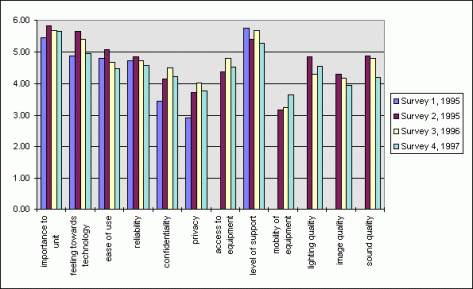
Table 9, following, provides a composite summary of staff attitudes to a number of factors, across four surveys: two in 1995 and one each in 1996 and 1997. The results show no statistical variation of any note, suggesting that telemedicine was implemented with adequate care in 1994-95 and that many of the problems associated with telemedicine such as the imperfect quality of the video and audio and the challenges of providing adequate privacy and confidentiality in an open dialysis ward are difficult to resolve.
Staff concerns and training requests have been met by a range of initiatives. However, the Renal Telemedicine continues to change, with the addition in 1998 of telemedicine-to-the-home and other modifications, so regular dialogue and evaluation is being conducted.
Table 9: Renal staff responses to telemedicine factors over four surveys, 1995-1997
What are the critical success factors?
Our research shows that the Renal Telemedicine Network at The Queen Elizabeth Hospital has succeeded in providing clinical, educational and administrative services, at a level of quality that has met with a high degree of acceptance from both patients and staff. The critical success factors in this project have included the following:
- staff need time to adjust, learn new skills, apply and reflect. Each change to the technology has been accompanied, as far as possible, with training, monitoring and evaluation.
- patients need induction and support and need to be empowered (e.g. to use the keypad without assistance from staff). The high rate of acceptance of telemedicine by renal patients is partly the result of these deliberate interventionist strategies. Patient acceptance can also be attributed to a perception by patients that telemedicine is providing them with improved services.
- the technology was constantly modified, to address the needs of staff and patients. The technology is still imperfect – for example, the rollabouts are too cumbersome – but the modifications have met with strong support from staff. Examples of modifications include the three different types of headsets used by patients, to improve the privacy of telemedicine consultations.
- the technology was adapted to the specific Renal context. The dialysis ward requires a mobile telemedicine unit that can easily be wheeled to the patient’s chair, or, alternatively, wheeled to a confidential consulting room away from the ward. The Renal environment for telemedicine also requires headphones for patient privacy during teleconsultations and miniature probe cameras for close up views of arms, necks and ankles.
- a commitment to continuous improvement of processes is required. Telemedicine is more than the technology. Telemedicine is a system of delivering healthcare in the Renal Unit and involves, based on our research, twelve different categories of staff. Collaboration is essential but it is just as important to have publicly articulated processes for this collaboration. These processes need to be continuously improved, to ensure optimum service quality and minimum response times to emergencies.
Telemedicine is a human activity, not just a technology installation: it requires collaboration, active support and effective management if it is to succeed. Even after three years of operation, active management is still required.
 RESEARCH - PLANNING - EVALUATION